
Introduction to AI in Digital Marketing
AI in digital marketing has been drastically changed by artificial intelligence, and in 2026, its influence will be greater than before. AI is being used by companies in a variety of sectors to improve marketing performance, improve customer experiences, and streamline operations. What was once thought of as a futuristic idea is now a practical requirement. AI is now the foundation of contemporary digital marketing strategy, not merely a tool. In an increasingly competitive digital world, AI helps marketers work smarter, quicker, and more efficiently by automating repetitive operations and providing personalized content at scale.
How AI is Transforming Data-Driven Marketing
With the help of AI, marketers can instantly analyze large datasets to gain insights into user behavior and forecast future actions. This aids companies in developing more intelligent and focused advertising efforts.
The capacity of AI to evaluate enormous volumes of data in real time is one of its biggest benefits for digital marketing. AI-driven solutions now offer predictive insights that assist firms in making well-informed decisions, whereas traditional marketing mostly depended on assumptions and historical data. AI can forecast what consumers are likely to do next by examining user behavior, preferences, and engagement patterns. This enables marketers to develop audience-resonant, highly targeted programs that increase conversion rates and boost return on investment. In 2026, data-driven marketing will be crucial for success.
Personalization at Scale Using AI in digital marketing
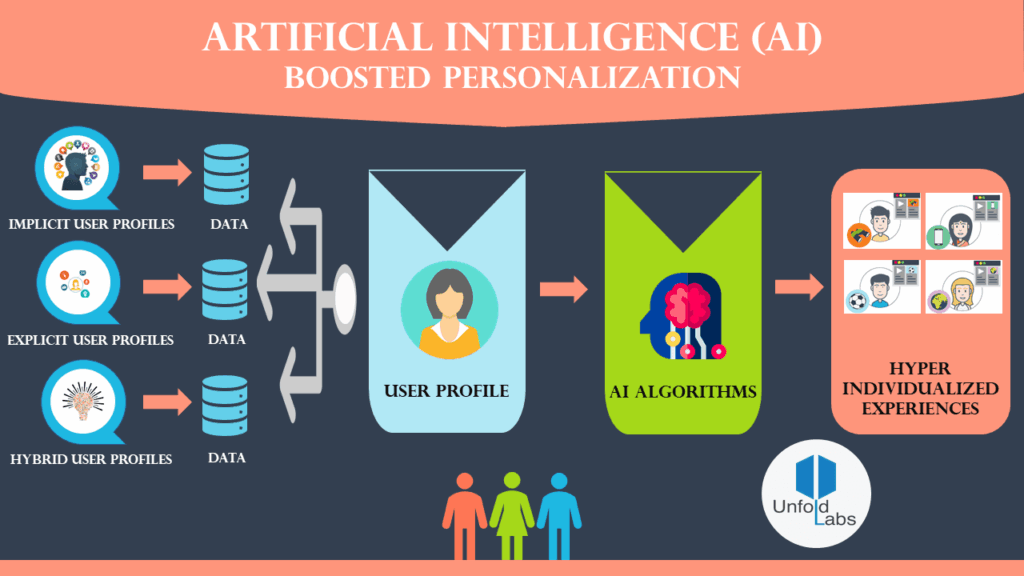
Customer engagement now heavily relies on personalization, and AI in digital marketing is essential to providing tailored experiences. By examining individual user data, artificial intelligence (AI) enables brands to better understand the wants and preferences of today’s consumers. AI makes sure that every connection feels pertinent and significant, whether it’s through product recommendations, email campaign customization, or website content customization. In addition to increasing client happiness, this degree of personalization fosters loyalty and trust, both of which are essential for sustained business expansion.
Content creation is another important area where AI is having a big impact. By 2026, high-quality material, such as blog entries, social media updates, and ad text, can be produced by AI-powered systems. AI helps marketers save time by managing tedious writing jobs and offering content recommendations based on popular subjects and keywords, even though human creativity is still crucial. This makes it possible for companies to stick to a regular content strategy without sacrificing quality. AI technologies can also optimize material for search engines, guaranteeing improved visibility and higher rankings on search engine results pages.
AI in Content Creation and SEO
With the use of AI, search engine optimization (SEO) has also changed. More intelligent search engines are concentrating on user intent rather than just keywords. AI enables marketers to comprehend user searches and produce content that meets their needs. Businesses must modify their SEO tactics in response to the growing prevalence of voice search and conversational searches. AI tools are able to evaluate search patterns, find pertinent keywords, and offer suggestions for enhancing the functionality of websites. This guarantees that companies continue to show up in search results and draw in natural traffic.
Another area where AI is having a big impact is social media marketing. Businesses must provide interesting and pertinent postings since platforms are utilizing AI algorithms to decide what information users view. Artificial intelligence (AI) systems may evaluate audience behavior, determine the optimal times to post, and recommend content ideas that are likely to be successful. AI also aids in social media conversation monitoring, which enables companies to gauge client mood and take preventive measures. Better engagement and closer ties with the audience result from this.
Challenges of AI in Digital Marketing
Despite its benefits, AI raises concerns about data privacy, security, and the need for skilled professionals to manage advanced tools.
Adoption of AI in digital marketing is not without difficulties, despite its many benefits. Data security and privacy are among the main issues. Businesses must make sure they adhere to data protection laws and uphold transparency in their data collection and usage practices because AI significantly depends on user data. The necessity for qualified experts who can utilize AI tools efficiently and decipher the insights they offer presents another difficulty. Even though AI can automate a lot of jobs, human experience is still needed to create plans and make important judgments.
The Future Trends of AI in Marketing
AI will continue to evolve with technologies like AR, voice search, and IoT, creating more immersive and personalized marketing experiences
AI in digital marketing has a bright future ahead of it. AI will grow more as technology develops, allowing companies to provide more effective and individualized marketing campaigns. AI’s skills will be further enhanced by integration with cutting-edge technologies like augmented reality and the Internet of Things, opening up new avenues for consumer interaction. Companies who adopt AI and adjust to these developments will have a big advantage over those that oppose innovation.
Conclusion
In conclusion, AI is changing the face of digital marketing in ways that were unthinkable only a few years ago. It enables companies to better understand their target audience, develop tailored experiences, and maximize the effectiveness of their marketing campaigns. However, a strategic approach, flexibility, and an emphasis on providing value to clients are necessary for success with AI. One thing is certain as 2026 progresses: AI is not only the future of digital marketing, but it is also the present, and companies who take use of its potential will be at the forefront of the digital era.